Choosing a UL 217 compliant smoke alarm is essential for reliable home safety. The right model offers quick smoke detection, durable batteries, and minimal nuisance alarms. This guide highlights five top UL 217 listed smoke detectors, covering 10-year battery models, AA battery options, hardwired systems, and smart capabilities. Each product features dual-detection, reduced false alarms, and clear alert indicators designed for American homes. Read on to compare the best options and find the detector that best fits your space and budget.
Summary Table Of Selected Products
- Kidde 10-Year Battery Powered Smoke & CO Detector (30CUD10) — 2-in-1 detection, long-life battery, enhanced sensing
- Kidde AA Battery Powered Smoke & CO Detector (2 Pack) — Easy install, no wiring, enhanced sensing
- Kidde 10-Year Battery Powered Smoke Detector (LED) — High decibel alarm, extended battery life
- HEIMAN Dual-Photoelectric Battery Powered Smoke Detector — Advanced dual-photoelectric detection, compact design
- HEIMAN Matter Compatible Smart Smoke Detector — Smart home integration, dual-detection, modern aesthetics
Kidde Smoke & CO Detector With 10-Year Battery

This 2-in-1 detector provides simultaneous smoke and carbon monoxide detection using a single device. The Never-Change 10-Year Battery eliminates battery chirps and the need for replacements, offering long-term maintenance-free operation. Enhanced sensing technology reduces false alarms from cooking or steam, while UL testing confirms compliance with UL 217, UL 2034, and FCC standards. A practical option for bedrooms and living spaces where continuous protection is desired without frequent maintenance.
Kidde AA-Powered 2-Pack Smoke & CO Detectors

This pair operates on two AA batteries, avoiding wiring challenges and simplifying installation. It offers 2-in-1 detection for smoke and CO and benefits from enhanced sensing that mitigates nuisance alarms. The design emphasizes plug-and-play setup by mounting the bracket to the ceiling and twisting the alarm into place, making it suitable for rental properties and quick upgrades in existing homes.
Kidde 10-Year Battery Powered Smoke Alarm

Designed to provide reliable smoke detection with a loud 85-decibel alarm and a red LED that flashes in sync, this detector emphasizes a long-lasting 10-year battery. It also features enhanced sensing technology to minimize false alarms caused by cooking. UL testing confirms compliance with UL 217 9th Edition and FCC standards, making it a solid choice for those prioritizing consistent performance and reduced nuisance beeps.
HEIMAN Dual-Photoelectric Battery Smoke Detector

This HEIMAN model emphasizes advanced dual-photoelectric detection for heightened accuracy and sensitivity to faint or slow-burning fires, while minimizing false alarms from steam and cooking. Its UL 217 10th Edition certification aligns with the most recent safety standards. The small, portable form factor, easy installation, and test/silence control make it suitable for bedrooms, kitchens, and utility spaces alike.
Kidde Four-Pack Hardwired Smoke Detector

This hardwired detector includes battery backup and interconnectivity, ensuring synchronized alerts across multiple rooms. It uses 120V AC wiring with two AA batteries for backup, and features enhanced sensing to reduce false alarms. The 4-pack option is well-suited for larger homes or newly wired installations, delivering uniform protection throughout the residence while maintaining UL 217 9th Edition compliance and FCC standards.
HEIMAN Matter Compatible Smart Smoke Detector
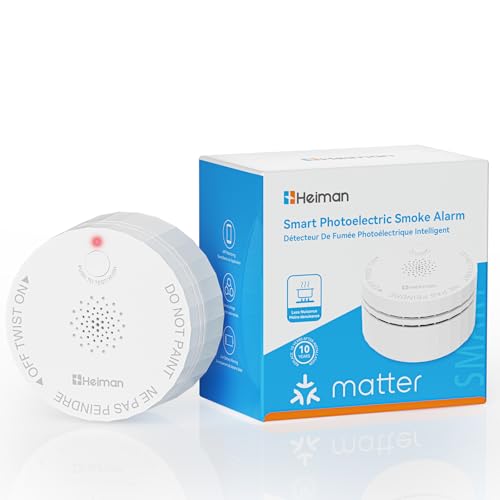
This smart detector integrates Matter over Thread for compatible ecosystems like SmartThings and Home Assistant, enabling local notifications and private data without cloud dependence. It features dual-photoelectric detection for precise smoke identification and a compact, award-winning design. Not compatible with Google Home or Alexa, but it offers modern smart-home integration and reliable UL 217 9th Edition conformity for smart houses seeking privacy-conscious safety devices.
Buying Guide: Key Purchase Considerations And Comparisons
When selecting UL 217 smoke alarms, consider these factors to match your home layout and safety priorities:
- Detection technology: Dual-photoelectric sensors offer greater accuracy and fewer nuisance alarms than ionization-only models. This is especially true for smoldering fires and cooking-related incidents.
- Power source: Decide between 10-year battery, AA battery, or hardwired with battery backup. Ten-year models minimize maintenance, while hardwired systems work well in newly wired homes with interconnected alarms.
- Interconnectivity: Interconnected detectors alert all units simultaneously in a home, improving response time during a fire. This is particularly valuable for multi-room layouts and large homes.
- Smart features: Some models offer smart home integration (Matter, Thread, or app-based alerts). Consider privacy needs, compatibility with your existing ecosystem, and whether cloud-based connectivity is acceptable.
- Installation: Simple ceiling mounting with brackets is common for 2-AA battery units, while hardwired units require proper wiring and may demand professional installation for certain electrical codes.
- Maintenance and warranties: Look for long-lasting batteries, clear testing procedures, and warranty coverage that aligns with your expected lifespan of the device.
- Compliance: Ensure the model is UL 217 compliant to meet standard industry safety requirements and to align with local building codes where applicable.
- Aesthetics and placement: Compact designs and low-profile forms fit modern interiors. Place detectors in sleeping areas, living rooms, kitchens (with proper spacing to reduce false alarms), and hallways for optimal coverage.
In summary, for broad protection across a home, a mix of 10-year battery detectors for bedrooms and living spaces, paired with interconnected or smart detectors in common areas, delivers robust safety. If you prefer a low-maintenance option, a 10-year battery model with enhanced sensing provides strong performance with minimal upkeep. For larger homes or new builds, hardwired interconnectable units ensure synchronized alerts across rooms, maximizing early warning capabilities.