For facilities such as offices, gyms, airports, and schools, selecting durable, reliable toilet cubicle door locks is essential to ensure privacy, reduce interruptions, and speed up turnover. This guide reviews top-rated options designed for high-traffic use, highlighting indicators that show vacant or occupied status, easy installation, and long-lasting materials. Below you’ll find five highly relevant products with practical features, followed by a buying guide to help you compare options and choose the best fit for your restrooms.
Summary Table of Selected Products
- Door Lock Indicator by LVOERTUIG — Satin Nickel, surface-mounted with bolt-through fixing, Vacant/Occupied indicator.
- EKDJKK Door Lock Indicator — Polished Chrome, indicating deadbolt with Vacant/Engaged indicator.
- MJFUNTXY Door Lock Indicator — Zinc alloy, reversible latch, Green/Red vacancy indicator.
- CALIDAKA 2PCS Door Lock Indicator — Polished Chrome, two-pack, easy installation, Vacant/Engaged indicators.
- Mettoo Door Lock Indicator — Chrome, surface mounted, occupancy indicator for public restrooms.
LVOERTUIG Door Lock Indicator For Public Restrooms

The LVOERTUIG door lock indicator is designed for bathroom cubicles and privacy partitions. It features a clear Vacant/Occupied indicator and a surface-mounted bolt-through fixing that can be installed directly on cubicle doors or flush panels. Built for high-traffic restrooms, this latch is suitable for toilets, showers, and bathrooms, providing a simple, visible status signal to reduce interruptions for staff and users alike.
EKDJKK Indicator Door Lock For Public Restrooms
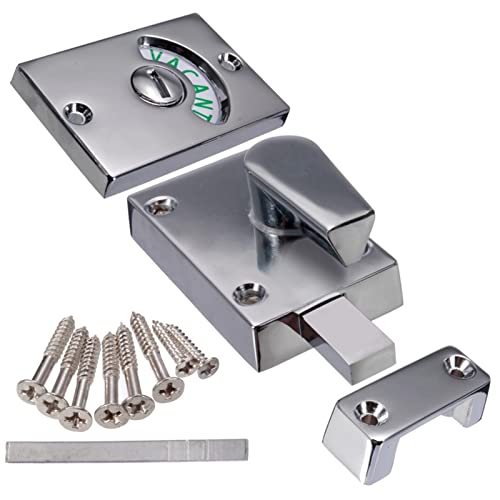
The EKDJKK door lock indicator includes a zinc body with polished chrome or satin nickel finishes. It provides a Vacant/Engaged indicator to quickly show whether a stall is available, minimizing door-knocking and ensuring privacy. The compact size (about 38x13x35 mm) and simple fixing make it suitable for standard public restroom partitions and privacy doors, ideal for high-traffic locations where quick status communication matters.
MJFUNTXY Zinc Alloy Indicator Lock
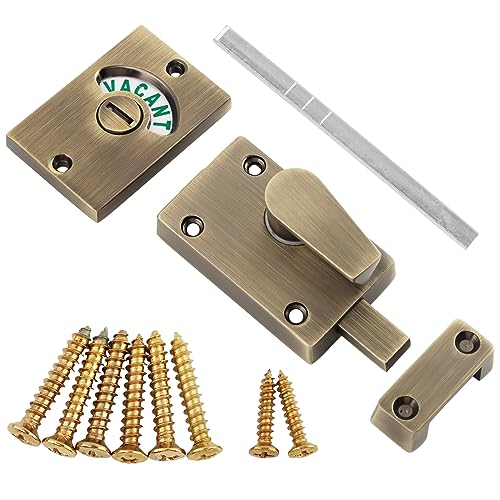
The MJFUNTXY indicator lock is crafted from zinc alloy for durability and features a reversible latch compatible with doors opening in either direction. It includes Vacant (Green) and Engaged (Red) indicators to clearly show occupancy, reducing unnecessary door-knocking. The design supports doors with typical thicknesses used in public restrooms and is suitable for cubicles and flush panel doors, delivering reliable performance in busy facilities.
CALIDAKA Two-Pack Door Lock Indicator Bolts

CALIDAKA offers a value-oriented two-pack of Vacant/Engaged door lock indicators in polished chrome, designed for straightforward installation on cubicle or flush panel doors. Each unit displays a clear Vacant (green) and Engaged (red) status, helping users identify availability at a glance. The kit includes keeps and fixings, making it a practical option for facilities upgrading multiple stalls without compromising on visibility or reliability.
Mettoo Door Lock Indicator For Public Restrooms

The Mettoo indicator lock emphasizes a user-friendly latch with a clear status signal for bathroom doors, suitable for privatized cubicles. It is surface-mounted with bolt-through fixing, allowing direct installation on cubicle doors or flush panels. This option is designed to be durable and dependable in restrooms where privacy and preventive notifications matter for occupant comfort and staff efficiency.
Buying Guide: Key Considerations And Comparisons
When choosing a toilet cubicle door lock with vacancy indicators, consider these essential factors to ensure compatibility, longevity, and user clarity:
- Indicator visibility: Look for green Vacant and red Engaged indicators that are large enough to read at a distance. Some models use color-coded signals and text for quick recognition.
- Material and finish: Zinc alloy, brass, or stainless steel are common in public restrooms. Finishes like polished chrome or satin nickel resist corrosion and wear from frequent cleaning and handling.
- Installation method: Surface-mounted, bolt-through, or flush-mounted designs affect ease of installation and door compatibility. Surface-mounted options are typically easier to retrofit on existing cubicle doors.
- Compatibility: Check door thickness ranges (commonly 12–18 mm) and the door opening direction. Reversible latch designs can accommodate doors that swing either way.
- Durability: High-traffic environments require durable materials and robust fixing mechanisms to withstand frequent use and cleaning agents.
- Maintenance: Choose models with simple maintenance needs and replaceable components (e.g., indicator lenses or screws) to extend life.
- Aesthetic fit: Public restrooms often benefit from uniform finishes that match fixtures and partitions; consider finishes that resist fingerprints and smudges.
- Cost vs. value: While two-piece packs can reduce costs for multi-stall facilities, ensure the indicators are clearly visible and durable enough for daily use.
Durability and readability are the two most critical aspects for restroom privacy locks. A robust lock with a bright, unambiguous Vacant/Engaged indicator minimizes interruptions and helps staff manage cleaning cycles more efficiently. For facilities prioritizing retrofit simplicity, surface-mounted indicators with standard bolt-through mounting offer a practical balance of ease, cost, and performance. For new installations, consider integrated panels with pre-drilled holes and standardized thickness allowances to streamline installation and maintenance.
Facility managers should also consider maintenance cycles and cleaning protocols. Choose finishes that withstand frequent disinfectants and do not tarnish easily. Regularly inspect indicators for wear or fading signaling and replace components promptly to maintain clear occupancy status across all stalls.
In summary, the five products highlighted above provide a range of metal constructions, finishes, and installation styles to fit varied restroom environments. By prioritizing clear occupancy indication, durable materials, and straightforward installation, facilities can improve privacy, reduce door-knocking, and maintain efficient restroom turnover even in high-traffic settings.