If you’re looking to keep cats away from beds, gardens, furniture, and other areas, these cat deterrents are designed to help. The top picks below are suited for different environments—from indoor training to outdoor yard protection—so you can choose the right approach for your situation. This guide highlights five effective options and explains who each is best for, plus practical cautions to consider.
| Product | Best For |
|---|---|
| Nature’s Mace Cat Mace Cat Repellent 40 oz Spray | Indoor areas and small outdoor zones; immediate spray coverage |
| Mgkenk 12 Pack Cat Deterrent Outdoor Balls | Yard, garden, flower beds; easy, surface-area placement |
| Nature’s Mace Cat Mace Cat Repellent 2.5 lb Granules | Plant beds, gardens, flower pots; all-season outdoor use |
| Rong Tronic Cat Repellent Outdoor & Indoor Balls | Flexible indoor/outdoor boundary around problem areas |
| Petfolio 12 Pack Scat Mat | Countertops, furniture, indoor sensitive zones; humane deterrent |
The following sections present five selected products with concise comparisons, best-use notes, and practical cautions to help you decide quickly.
Nature’s Mace Cat Mace Cat Repellent 40 oz Spray
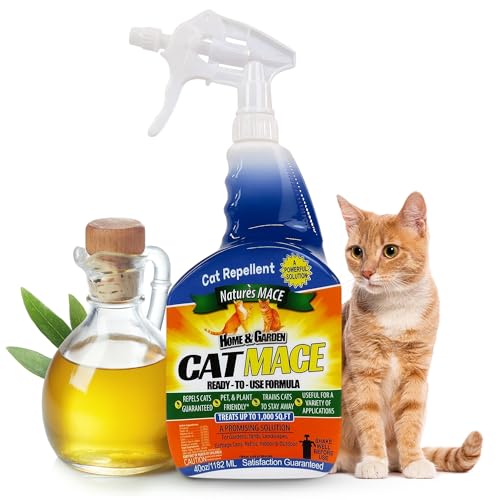
Best For: Immediate, targeted indoor and nearby outdoor areas needing quick behavior modification. This spray is ready-to-use and covers up to 1,000 sq ft with daily application in the training phase. Ideal for treating beds, furniture, and entryways.
- Ready-to-use 40 oz bottle—no mixing required.
- Contains essential oils that cats dislike, creating a scent aversion.
- Training guidance suggests daily use for 7–10 days, then reduced maintenance.
Caution: Avoid applying directly on delicate fabrics or surfaces that may be damaged by essential oils. Test a small area first if unsure about finish compatibility.
Mgkenk 12 Pack Cat Deterrent Outdoor Balls

Best For: Outdoor deterrence over large yard spaces and garden edges where odor-based repellents are preferred over sprays. The balls release a scent that cats dislike and can be placed around problem zones for consistent coverage.
- Plant-based ingredients with scents including camphor and oils; designed to be pet-safe when used as directed.
- Long-lasting scent—effective for 15–20 days per ball with dry conditions.
- Suitable for indoor or outdoor use, but moisture and rain can shorten effectiveness.
Caution: Reapplication may be needed after heavy rain or irrigation to maintain a scent boundary.
Nature’s Mace Cat Mace Cat Repellent Granules 2.5 lb
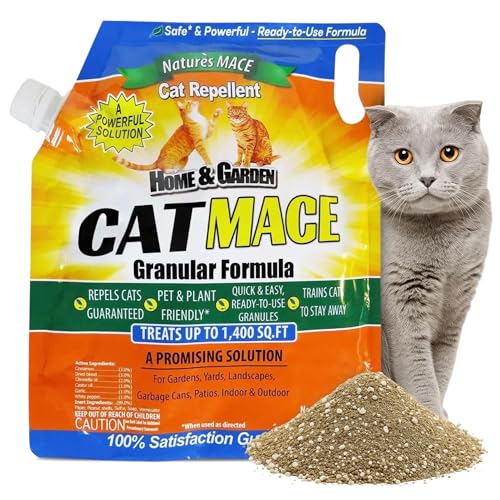
Best For: All-season outdoor protection for flowerbeds, gardens, and patios. Granules create a persistent barrier that discourages digging, peeing, and plant damage.
- Plant-based formula designed to be safe around people, pets, and plants when used as directed.
- Weather-resistant granules that provide durable outdoor protection.
- Great for creating boundary zones in outdoor landscapes; can be used in pots and garden beds.
Caution: Reapply after heavy rainfall or irrigation to maintain effectiveness. Observe for any surface staining on light-colored materials.
Rong Tronic Cat Repellent Outdoor & Indoor Balls

Best For: Flexible boundary management around frequently visited areas without electronics. Suitable for both indoor/outdoor use, particularly where a simple, scent-based deterrent is preferred.
- Botanical scent formulation using lemon, peppermint, ginger oils and vinegar.
- Easy-to-place deterrent balls occupy problem zones without complex setup.
- Keep cats away from gardens, doorways, and furniture edges where they tend to linger.
Caution: Odor intensity may vary by climate; stronger in warm, dry conditions and milder in humid settings.
Petfolio 12 Pack Scat Mat

Best For: Indoor use on counters, furniture, and other surfaces where cats tend to jump or scratch. The spike mat acts as a humane deterrent to discourage access without harming pets.
- Durable plastic construction designed for seasonal use inside or outdoors.
- Effective as a counter deterrent and for general indoor training.
- Multi-purpose; can also deter dogs from restricted areas and prevent damage to plants.
Caution: Not a chew-proof option for very curious pets; supervise initial use and ensure proper placement away from sharp edges.
Buying Guide
Key considerations to help you choose the right deterrent for your space:
- Location: Indoor training versus outdoor perimeter. Sprays are quick for spot treatment, while granules and balls work well for yards and garden borders.
- Longevity: Consider weather exposure. Granules and scented balls generally last longer outdoors; sprays may require more frequent reapplication during training.
- Safety: Look for plant-based or essential-oil formulations if you’re concerned about pets, children, or plants. Always follow label directions.
- Environment: All-season options are ideal for year-round protection in gardens; indoor mats suit high-traffic zones like counters and furniture.
- Maintenance: Some solutions require daily application early on; others provide longer intervals between reapplications. Balance effort with expected effectiveness.
Frequently Asked Questions
- Do cat deterrents harm cats? Most products are designed to deter rather than injure cats. Always check ingredients and use as directed.
- Can I use multiple deterrents together? Yes, layering products (indoor spray for interior zones and outdoor balls or granules for gardens) can improve coverage.
- Will deterrents stain surfaces? Some essential oils can affect fabrics or finishes; test a small area first and avoid delicate materials.
- How long do deterrents last outdoors? It varies by product and weather; plan for reapplication after rain or heavy irrigation.
- Are these deterrents safe for kids and other pets? Choose plant-based formulas and follow label safety guidelines to minimize risk to all household members.
- Should I still train my cat? Deterrents work best when combined with positive training and environmental adjustments to reduce attractants.