Radiator leaks can disrupt driving comfort and engine safety. This guide highlights reliable stop-leak radiator products to consider, explaining how each formula works, what types of leaks they address, and what to expect after using them. The selections below are designed to help American drivers choose a practical, effective remedy without costly immediate repairs.
Summary of chosen products
| Product | Brand | Key Benefit | Approximate Use |
|---|---|---|---|
| Bar’s Leaks Cooling System Radiator Stop Leak 16.9 oz. | Bar’s Leaks | Liquid aluminum formula that seals radiator and heater-core leaks | Permanent seal with coolant compatibility |
| Bar’s Leaks 1109 Liquid Copper Block Seal | Bar’s Leaks | One-step, copper-based seal for blocks, heads, manifolds, and gaskets | Antifreeze compatible; no draining required |
| Liqui Moly Radiator Stop Leak | Liqui Moly | Immediate sealing for various cooling system leaks | Works with or without water filters |
| Bar’s Leaks Radiator Stop Leak 11 oz | Bar’s Leaks | Seals internal and external leaks; protects against rust | Good for ongoing protection across radiators and heater cores |
| Visbella Radiator Stop Leak Sealer Conditioner | Visbella | Stops leaks and lubricates water pump; preventive rust protection | Safe for metals, plastics, hoses |
Bar’s Leaks Cooling System Radiator Stop Leak 16.9 oz
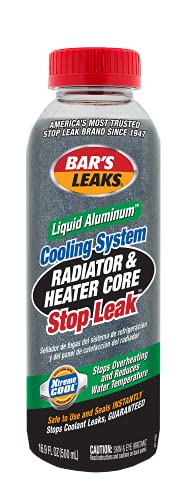
Bar’s Leaks 16.9 oz Liquid Aluminum Stop Leak is designed to seal radiator leaks and heater-core leaks while contributing to a modest reduction in operating temperature. The aluminum-based formula aims to provide a strong, durable seal for metal and plastic components alike. It is positioned as an all-purpose fix for small leaks around gaskets and freeze plugs, with the potential to extend cooling-system life when used as directed. As with other stop-leak products, effectiveness depends on leak size and system condition, and proper mixing with the cooling system is essential to avoid blockages.
Bar’s Leaks 1109 Liquid Copper Block Seal, 18 oz

The Bar’s Leaks 1109 product uses a copper-based, one-step formula designed to permanently seal leaks in cooling-system components such as blocks, heads, intake manifolds, and gaskets. It claims antifreeze compatibility and does not require draining the system prior to use. The liquid glass technology bonds with existing coolant to form a durable seal, addressing relatively large and small leaks. For owners seeking a quick, straightforward fix, this option emphasizes a balance between ease of use and long-term sealing performance.
Liqui Moly Radiator Stop Leak | 250 ml

Liqui Moly Radiator Stop Leak is formulated to seal leaks immediately in all cooling-water systems. This cooler additive is positioned for broad compatibility across different vehicle makes and models, and it can work with or without water filtration. The product aims to protect the combustion chamber from coolant intrusion and reduce the risk of overheating by strengthening seals and reducing metal-to-metal wear. It is presented for users who want a quick fix that supports safe operation of the cooling circuit in diverse environments.
Bar’s Leaks Radiator Stop Leak, 11 oz

Bar’s Leaks Radiator Stop Leak 11 oz uses a pelletized formula designed to seal both internal and external leaks, including coolant-to-oil scenarios. It is claimed to be effective on plastic, aluminum, and metal radiators, heater cores, blocks, heads, gaskets, and freeze plugs, with added rust-inhibition to help protect the water pump seals. The regulated dosing and pellet-based delivery are intended to provide consistent performance across a range of cooling-system configurations, making it a flexible option for preventive maintenance and repair projects alike.
Visbella Radiator Stop Leak Sealer Conditioner

Visbella’s Radiator Stop Leak Sealer Conditioner is engineered by automotive and chemistry experts to ensure the cooling system runs smoothly. It is described as safe for all metals, plastics, rubbers, and hoses, and it is compatible with all antifreeze types. The product not only stops leaks but also provides rust prevention and water-pump lubrication. This option is marketed toward users seeking a comprehensive protective measure that combines leak sealing with preventive care for aging cooling systems.
Buying Guide
When choosing a radiator stop-leak product, consider the following factors to align with your vehicle’s needs and maintenance philosophy.
- Leak type and location: Different formulas target different parts of the cooling system—radii, gaskets, heater cores, or freeze plugs. For large leaks, a stronger seal may be necessary, while small seepage can often be managed with milder formulations.
- Material compatibility: Ensure the product is compatible with your coolant type and your radiator material (plastic, aluminum, or steel). Antifreeze compatibility is commonly emphasized for many formulas.
- Drain and flush requirements: Some products require no draining, while others perform best after a partial drain and refill. Follow the manufacturer’s directions to avoid unintended blockages or reduced cooling efficiency.
- One-step versus multi-step processes: One-step products offer convenience but may provide less control over dosing. Pelletized or granular formulas can require more precise application for optimal results.
- Durability and duration of seal: Consider whether you want a temporary fix or a long-term seal. Some products claim permanent sealing, while others provide ongoing protection with periodic reapplication.
- Vehicle type and condition: Older cooling systems with multiple leaks or mixed materials may respond differently than newer, well-maintained systems. In severe cases, professional diagnosis is advised to prevent engine damage.
- Maintenance integration: A stop-leak product is typically part of a short-term fix. For persistent leaks or high-mileage vehicles, use as an interim measure while planning a permanent repair, such as gasket replacement or core replacement.
- Safety and disposal: Handle all additives per label instructions and dispose of leftover products according to local regulations. Avoid mixing different stop-leak products unless explicitly advised by the manufacturer.
Compared to a traditional repair, stop-leak solutions offer a fast, accessible option for reducing coolant loss and potential overheating. They can provide buy-time for planned maintenance or roadside accommodations. However, barriers exist: not all leaks respond equally, and aggressive sealants can, in some cases, clog passages if overused or used in improper conditions. Always start with a clean system, monitor temperatures, and seek professional advice if leaks persist, worsen, or if the cooling system shows signs of overheating, unusual odors, or dramatic pressure changes.