Here’s a concise guide to effective rat traps that work, tailored for American homes and yards. The top picks below cover humane live traps, easy-to-use snap traps, and glue boards for different settings. Each option suits specific buyers: homeowners seeking humane release, those needing quick indoor control, or outdoor setups requiring weather resistance. A quick comparison table follows to help you decide at a glance.
| Product | Best For | Key Benefit |
|---|---|---|
| TRATPER Rat and Chipmunk Traps (2 Pack) | Indoor & Outdoor use; humane kill | Covered tunnel design protects kids and pets |
| Catchmaster Rat & Mouse Glue Traps (6 Pack) | DIY quick-placement glue traps | Ready-to-use, weather-resistant, low-maintenance |
| IIWEY Humane Mouse Traps (2-Pack) | Live release; pet-safe | Largest living space; easy release |
| TRATPER Rat and Chipmunk Traps (4 Pack) | Bulk indoor/outdoor control | Dual-entry tunnel; quick setup |
| Tomcat Rat Snap Trap | Indoor or covered outdoor use | Removable bait cup; strong hold |
TRATPER Rat and Chipmunk Traps — 2 Pack

The 2-pack by TRATPER uses a covered, dual-tunneled design to minimize accidental triggering and keep children and pets away. It’s a snap trap that delivers a quick kill and is reusable for ongoing pest control. Best for homeowners who want a contained trap that can be placed indoors near walls or in outdoor sheltered areas.
Who it’s best for: households seeking a humane, enclosed design with straightforward setup and reuse. Why selected: the enclosed tunnel reduces exposure to technicians of all ages and simplifies placement in active rat zones.
Cautions: ensure bait is placed securely inside the tunnel and check traps regularly to confirm humane outcomes. Do not leave the trap in direct reach of curious pets or very young children.
Catchmaster Rat & Mouse Glue Traps 6 Pack

These ready-to-use glue traps are sturdy and designed for year-round use in damp environments. The adhesive is formulated to stay effective over time, making them suitable for homes, garages, and enclosed outdoor spaces. They require minimal setup, with bait not always necessary in practice.
Who it’s best for: buyers seeking a set-and-forget option that doesn’t rely on spring mechanics. Why selected: glue traps provide a non-electrical alternative that’s easy to deploy in corners and along walls.
Cautions: glue traps can be less humane for some users and may require careful handling to avoid contact. They should be used in areas where pets and children do not frequent; remove and replace if not trapping as needed.
IIWEY Humane Mouse Traps — 2 Pack
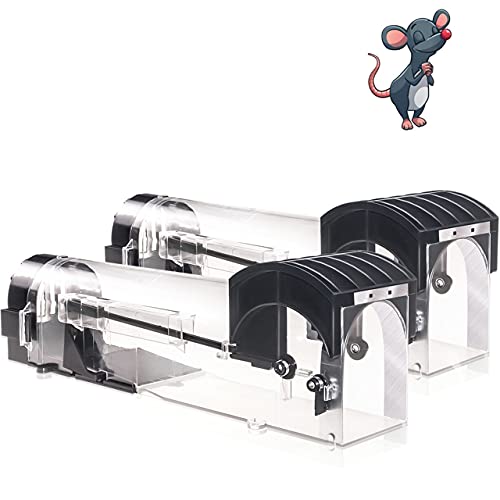
This live-capture option emphasizes safety and release. It offers the largest living space among humane traps in its class, with a simple front-door setup. After capture, you can release rodents away from your home without direct contact with the animal.
Who it’s best for: families prioritizing humane treatment and stress-free release. Why selected: the large interior reduces tail pinching and suffocation risks common in smaller live traps.
Cautions: relocation should be conducted in compliance with local wildlife guidelines; ensure trap placement minimizes bystanders’ exposure to wildlife during release.
TRATPER Rat and Chipmunk Traps — 4 Pack

This is a bulk option with the same enclosed tunnel design as the 2-pack. It emphasizes ease of use with a hands-free setup and a quick-action locking mechanism. Best for larger homes or spaces with multiple hotspots.
Who it’s best for: buyers needing multiple traps for comprehensive coverage. Why selected: the 4-pack allows wider deployment in garages, basements, or sheds without compromising safety.
Cautions: regular checks are advised to prevent prolonged capture times, which can be stressful for rodents and may attract other pests if left unattended.
Tomcat Rat Snap Trap
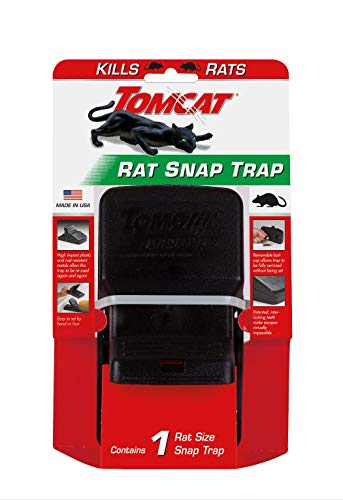
The Tomcat Rat Snap Trap combines a robust snap mechanism with a removable bait cup for safe servicing. It’s designed for indoor use or sheltered outdoor spaces and is positioned perpendicular to travel paths for optimal effectiveness. The design helps reduce escapes after triggering.
Who it’s best for: homeowners needing a reliable, quick-kill trap with straightforward maintenance. Why selected: its removable bait cup simplifies setup and servicing without full trap resetting.
Cautions: placement away from accessible areas is essential to avoid unintended contact by children or pets; use in corners along walls where rats typically travel.
Buying Guide: How To Choose The Right Rat Trap
- : Decide between snap traps for quick kills, humane live traps for relocation, or glue boards for constant coverage in high-traffic areas. Each type offers different levels of immediacy and humane considerations.
- placement and safety: Place traps along walls, in corners, and near known rat pathways. Enclosed or covered designs reduce accidental triggering and protect children and pets.
- ease of use: If you prefer minimal handling, choose traps with simple bait setups and automatic locking or release mechanisms. Reusability matters for ongoing infestations.
- indoor vs outdoor: Outdoor traps should be weather-resistant and placed away from direct exposure to rain and sun. Indoor traps often require compact footprints and easy monitoring.
- release and disposal: Live traps require local relocation guidelines and safe release practices. Glue traps demand careful disposal and may be less humane in some scenarios.
- cleanup and maintenance: Consider traps with removable bait cups or easy-to-clean components to reduce recurring maintenance time.
FAQ
- What type of trap is best for a small apartment? A compact snap trap or a multi-pack enclosed trap is ideal for limited space and quick results, with minimal risk to children and pets.
- Are live traps better than kill traps? Live traps prioritize humane relocation but may require local relocation compliance and longer handling time. Kill traps provide immediate results but require careful safety practices.
- Can glue traps be used outdoors? Yes, but they are most effective in enclosed or sheltered outdoor areas where exposure to weather is limited and visibility is high to check progress.
- How often should traps be checked? Check traps daily to ensure humane treatment and to reset or dispose of captured pests promptly.
- Is it okay to reuse a trap after capture? Reusable traps can be reset after cleaning and baiting as long as there is no damage to the mechanism or safety features.
- What’s the best trap for safety around pets? Enclosed or covered traps and live-release models reduce direct contact with pets and give you safer deployment options.