Finding reliable, durable signage for helicopter landing zones is essential for safety and compliance. This guide highlights top-rated emergency landing area signs designed for outdoor and industrial use. Each pick offers durability, visibility, and easy mounting to ensure messages are legible from a distance, day or night.
Summary of chosen products:
| Product | Brand | Material | Key Feature |
|---|---|---|---|
| Helicopter Landing Area Emergency Access is Required at All Times Sign, 10×14 Inches | Sigo Signs | Rust-free aluminum | Fade-resistant, indoor/outdoor durability |
| Caution – Helicopter Landing Area, High Wind And Noise Area Sign | SmartSign | 3M Engineer Grade Reflective Aluminum | High visibility, DOT-compliant reflectivity |
| Helicopter Landing Area Emergency Access is Required at All Times Sign, 12×18 | Sigo Signs | 3M EGP Reflective .063 Aluminum | Excellent night readability |
| Helicopter Landing Area Emergency Access is Required at All Times Sign, 18×24 | Sigo Signs | 3M EGP Reflective .080 Aluminum | Strong daylight/night visibility |
| Helicopter Landing Zone Sign, 12×12 Inches | Sigo Signs | HDPE | Pre-drilled holes for mounting |
Helicopter Landing Area Emergency Access is Required at All Times Sign (10×14)

Product: 10×14 inches, aluminum sign engineered for indoor and outdoor use. Made from rust-free aluminum, this sign resists wear and maintains its shape over time. The UV-resistant print keeps colors bold and text legible in sun and rain alike. Ideal for mounting at entry points, runways, or hangar walls where clear helicopter access messaging is critical.
Caution – Helicopter Landing Area Sign (12″ x 18″) 3M Engineer Grade Reflective
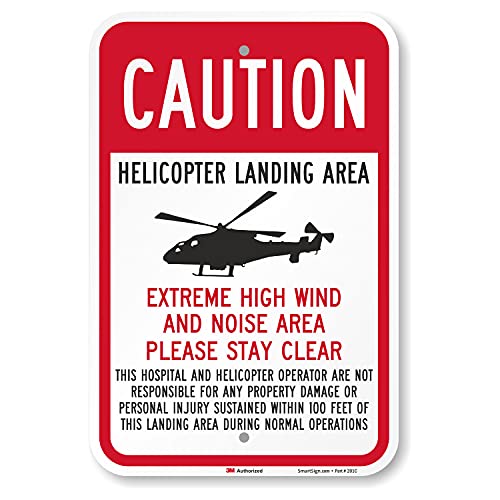
Product: 12×18 inches, 3M-authorized engineer-grade reflectivity on rustproof aluminum. Designed to meet outdoor signage standards with a 10-year durability rating and a protective laminated layer to withstand weather, graffiti, and daily wear. A strong option for high-visibility zones in windy or loud environments near helicopter operations.
Helicopter Landing Area Emergency Access is Required at All Times Sign (12×18)

Product: 12×18 inches, 3M EGP reflective aluminum provides enhanced daytime and nighttime visibility. The high-contrast, fade-resistant finish endures sun exposure and varying weather. Designed for critical messaging with a professional look suitable for hangars, tarmac, or outdoor facilities requiring clearly marked emergency access.
Helicopter Landing Area Emergency Access (18×24) 3M EGP Reflective Sign

Product: 18×24 inches, 3M EGP reflective aluminum with fade-resistant graphics. This large-format sign delivers high visibility for wide approaches and busy ramp areas. UV-resistant inks help maintain clarity in bright sunlight, while the reflective surface ensures readability at night when illuminated by vehicle headlights or floodlights.
Helicopter Landing Zone Sign (12×12) HDPE

Product: 12×12 inches, HDPE material with pre-drilled mounting holes. The sign is designed for long-lasting outdoor use without fading, and it ships pre-drilled for easy installation. Made in the USA, this option emphasizes durability and straightforward mounting at smaller entry points or guard posts near landing zones.
SmartSign K-5180-EG-12×18 No Parking – Authorized Emergency Vehicles Only

Product: 12×18 inches, 3M-authorized, rustproof aluminum with reflective 3M film. This sign is designed for outdoor parking and traffic areas around emergency zones, ensuring durable performance and legible messaging under various lighting conditions. The laminated finish protects against weather and graffiti, extending sign life.
“Emergency Shut-Off” Sign with Down Arrow by SmartSign

Product: 10×7 inches, 3M-reflective aluminum with down-arrow indicator. The sign emphasizes clarity and quick recognition for shut-off procedures, leveraging reflective material for nighttime readability. It features a durable, weather-ready build with a laminated coating to resist wear and graffiti, suitable for utility rooms or outdoor control points.
Buying Guide: Key Purchase Considerations for Emergency Landing Signs
When selecting emergency landing area signs, consider visibility, durability, and mounting practicality. For daytime use, vibrant colors and bold typography improve legibility at a distance. For nighttime performance, reflectivity and luminance are critical, especially in hangar perimeters or runways where headlights are common. Aluminum signs resist rust and weather, while HDPE offers impact resistance and lower cost. Pre-drilled holes speed installation and reduce the need for specialized hardware.
Material choice is central to longevity. Reflective aluminum signs with UV-resistant inks endure outdoor exposure and maintain readability across seasons. Laminated graphics add protection against graffiti and weather, extending the life of the sign in high-traffic or windy environments. For secure, long-term installations, 3M-authorized products provide validated performance in terms of reflectivity and durability.
Size considerations balance visibility with mounting practicality. Smaller signs (10×14, 12×12) fit tight spaces along hangar walls or near access points, while larger formats (12×18, 18×24) are ideal for open areas or long approach corridors. Pre-drilled mounting holes simplify installation and reduce project time. Always verify local regulations or aviation guidelines to ensure signs meet required standards for emergency access messaging.
Durability vs. cost is another axis. Premium aluminum signs with 3M reflectivity commonly last longer under sun and rain, but HDPE signs can be a cost-effective option for temporary installations or less critical zones. Consider whether you need high-night visibility, weatherproofing, or graffiti resistance based on the site’s conditions and traffic.
Accessibility and readability matter. Use high-contrast color schemes (e.g., red on white, white on red) and large letterings for quick comprehension from moving vehicles or personnel approaching the landing area. In mixed-use facilities, ensure symbols and wording are unambiguous to minimize misinterpretation during emergencies.