You’re looking for a reliable 2 inch diameter spring to fit a specific project. This guide identifies five Amazon options with near-by diameters or compatible sizes, focusing on use cases, material quality, and load characteristics. The selections are suited for appliances, hardware projects, automotive tweaks, and DIY repairs where a compact, sturdy spring is needed. Use this overview to compare fit, spring rate, and durability before purchasing.
| Product | Approx. Diameter / Size | Best For | Limitation |
|---|---|---|---|
| Prime-Line SP 9734 Compression Spring | OD 1-1/8″ | Appliances and light mechanical devices requiring flat-end coils | Diameter smaller than 2″, suitable when a 2″ target is flexible |
| Black Compression Springs (O.D. 1.7″ x I.D. 1.25″ x Length 3.9″ ) | OD ~1.7″ | Medium-duty applications where larger coil supports moderate loads | Less than 2″ diameter |
| Black Compression Springs, Heavy Duty (2 Pack) | OD ~1.7″ | Durable, repeated compression cycles in compact spaces | Diameter under 2″ |
| Century Spring C-680 Compression Springs | 2″ (length) — Diameter not explicit | General-purpose compression for 2″ length slots | Diameter not specified in listing |
| Mcredy Extension Springs 2Inch, Stainless Steel | Total Length 2″ (extension) | Dual-hook extensions for easy mounting and resilience | Extension type, not compression |
Prime-Line SP 9734 Compression Spring

Material: Spring steel, nickel-plated finish. Size: 1-1/8 inch outside diameter, 3 inch length, 0.105 inch wire diameter. Features flat end coils and strong spring rate. Maximum safe load around 41.6 lbs with a maximum deflection of 1.108 inches. Best for light to moderate-load devices where compact mounting is required.
Who it’s best for: small appliances, automotive trims, and mechanical devices needing a robust, corrosion-resistant compression spring in tight spaces. Why selected: reliable steel construction and a defined load curve support predictable performance. Caution: diameter is smaller than 2 inches, so verify fit for non-standard housings.
Black Compression Springs (O.D. 1.7″ X I.D. 1.25″ X Length 3.9″ )

Features: Brand New, two-piece lot; OD about 1.7 inches, ID about 1.25 inches, length about 3.9 inches; .218 gauge (1/4″) coil wire; designed for supporting bodies within about 3.7 inches circumference. Best for medium-duty applications where a slightly larger coil helps stability.
Who it’s best for: DIY builders and hobbyists needing a larger-than-average compression coil for compact machines. Why selected: clear dimensional data and a ready-to-use dual-pack. Caution: not a true 2 inch diameter; ensure your housing tolerates a 1.7 inch OD.
Black Compression Springs, Heavy Duty 2 Pack
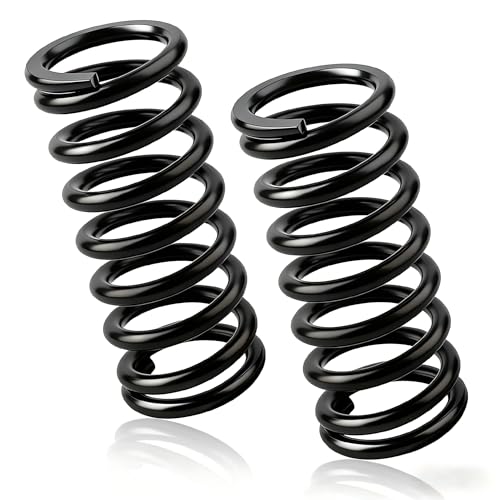
Specifications: 1.7″ outer diameter, 1.25″ inner diameter, 3.9″ nominal free length, 1/4″ wire diameter, black oxide finish. Stable spring rate of 163 lbs per inch. Designed for predictable force across the stroke and robust structural integrity through cycles.
Who it’s best for: projects needing corrosion resistance and consistent performance under repeated compression. Why selected: strong, uniform tolerances and a durable finish. Caution: diameter is 1.7″, not exactly 2″; check clearance in tight enclosures.
Century Spring C-680 Compression Springs
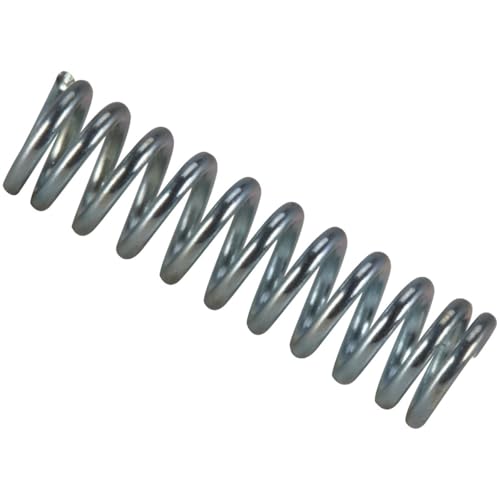
Specs listed: 0.047 inch wire diameter, 1.15 inch solid height, 15.7 lbs maximum safe load. These are compact compression springs designed for precise fitment in small assemblies. Best for compact devices requiring a small spring with a low load profile.
Who it’s best for: aerospace, electronics enclosures, and precision instruments where space and load are constrained. Why selected: tight dimensions and predictable force in small form factors. Caution: diameter is not specified in the listing; verify fit before ordering for critical assemblies.
Mcredy Extension Springs 2Inch

Features: Total length 2 inches; outer diameter 0.4 inches; stainless steel with dual-hook ends in a 2-pack. Designed for extensions and applications requiring easy mounting and rust resistance. Provides strong elasticity with long-term durability.
Who it’s best for: hardware and outdoor equipment projects needing a robust extension spring with corrosion resistance. Why selected: dual-hook design simplifies installation. Caution: extension springs behave differently from compression springs; ensure correct mounting orientation for your mechanism.
Buying Guide
What size to choose: diameter vs. length
Measure the housing opening and available clearance. If your space strictly requires a 2 inch diameter, many listed options do not reach that exact size. In practice, a 1.7″ to 1.8″ OD can often substitute when housing tolerances allow. When exact diameter matters most, consider specialty manufacturers or nonstandard catalogs.
Material and finish considerations
Spring steel with a protective finish (nickel or black oxide) improves corrosion resistance and durability. Stainless steel offers excellent rust resistance and higher fatigue life in outdoor or humid environments.
Load and stroke expectations
Check the maximum safe load and the deflection or free length. A higher spring rate (lbs per inch) means more force per stroke but less travel. Choose a spring that provides sufficient force while allowing full compression within your device’s available stroke.
Application type: compression vs. extension
Compression springs are common in recoil and load-bearing roles, while extension springs are used to return components to a resting position. Ensure you select the correct type for your mechanism and mounting method (hooks, ends, or integrated fittings).
Durability vs. cost
Heavy-duty options tend to be more resilient but cost a bit more. For high-cycle environments, prefer consistent tolerances and hard-dinish finishes that resist wear over time.
Practical tips for buyers
- Double-check the inside and outside diameters against your housing constraints.
- Prefer springs with defined coil end shapes for stable seating in fixtures.
- Order small sample quantities to verify fit before scaling up.
FAQ
- Q: Can I use a 1.7″ OD spring where I need 2″ OD?
- A: It depends on your housing tolerances. If the space allows for slight reductions in diameter and the fit remains secure, it can be a workable substitute. Otherwise, seek a closer match or a custom option.
- Q: What is the difference between compression and extension springs?
- A: Compression springs resist axial compression and return to resting length; extension springs extend under load and return when the load is removed. Mounting ends vary by design.
- Q: How do I choose the right spring rate?
- A: Consider the maximum force your mechanism will apply and the required travel. A higher rate provides more force per inch but reduces available compression distance.
- Q: Are stainless steel springs better than carbon steel?
- A: Stainless steel offers superior corrosion resistance and fatigue life, especially in humid or outdoor environments, but may be more expensive.